Advertorial — paid content from an advertising partner
Limited-time sale: {{ discountLabel }} — stock is running low See today's price
Independent sleep & posture reporting
{{ kicker }}

{{ headline }}

{{ dek }}
By Diane Whitaker
Health desk · Updated August 2026 · 8 min read
Fact-checked · sleep science review
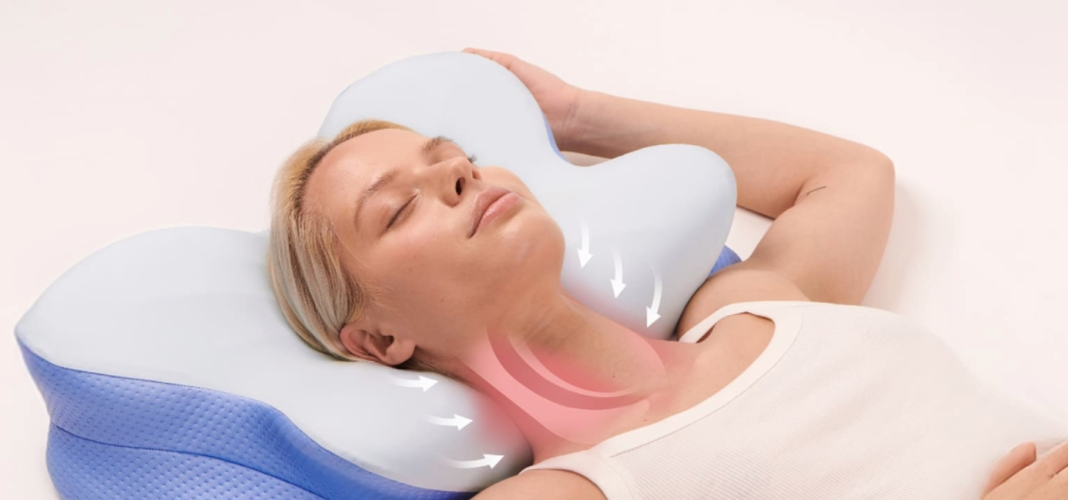
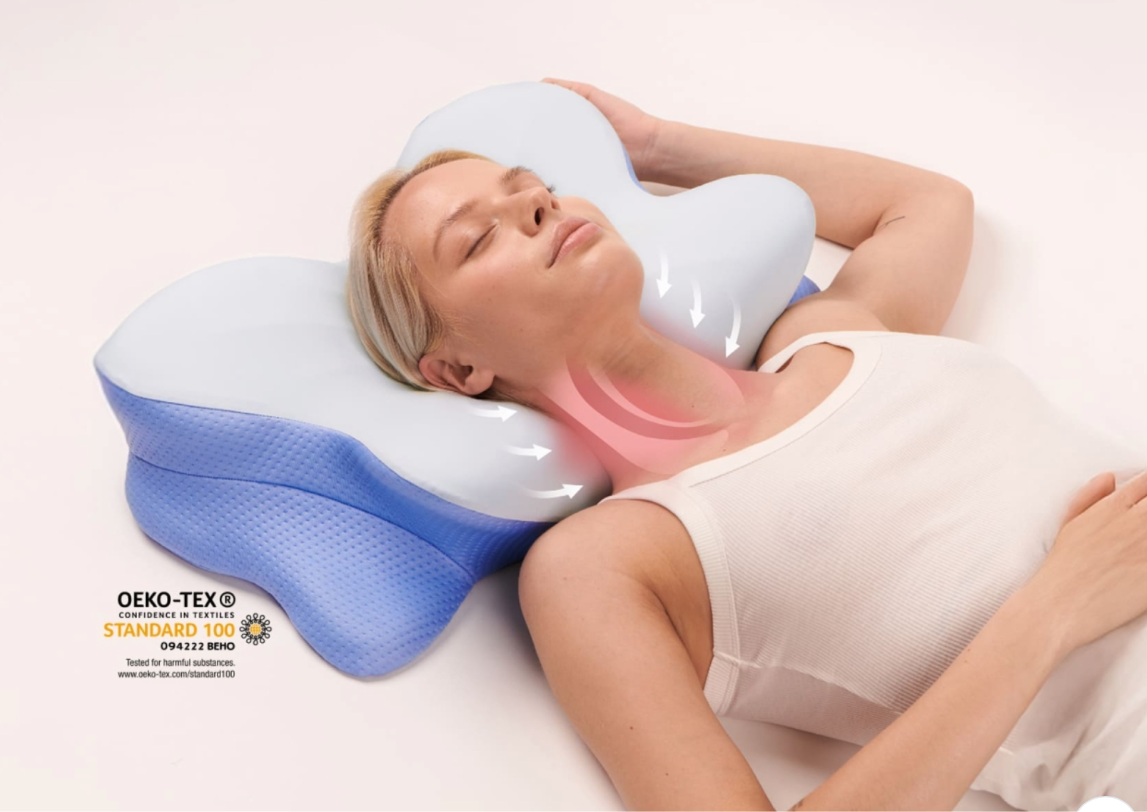
Woman asleep on a butterfly-contoured memory foam pillow, arms resting in the side cut-outs
Cervical misalignment during sleep is now one of the most-cited causes of morning pain and interrupted breathing.

I spent eleven years blaming the wrong thing. My mattress. My desk chair. My age. Every morning began the same way: a dull ache from the base of my skull into my right shoulder, and a strange numbness in two fingers that took an hour to fade.

What finally changed it was not a specialist, a stretch routine, or a $2,000 mattress. It was seven inches of foam under my head — and a fairly uncomfortable explanation of what my old pillow had been doing to me for a decade.

Editor's note: This article discusses sleep posture in general terms and is not medical advice. If you have been diagnosed with sleep apnea or a cervical spine condition, talk to your physician before changing your sleep setup.

The eight hours nobody supervises

You can correct your posture at a desk. You cannot correct it while unconscious. For roughly a third of your life, your head — ten to twelve pounds of it — is held in whatever position your pillow decides.

The cervical spine is built with a forward curve. A flat or collapsed pillow lets the head drop below that line; a thick, springy one shoves it forward. Either way the small muscles at the back of the neck spend the night doing a job they were never meant to do: holding weight instead of resting.

Three things tend to follow, and they are the reason most people eventually start searching at 3am.
01
Nerve compression in the neck and shoulder
Pressure around the brachial plexus is what produces the tingling, the numb fingers, and the arm that "falls asleep" before you do.
02
A narrowed airway
Tip the chin too far toward the chest and soft tissue crowds the back of the throat. Snoring is the audible version of that. Waking with a dry mouth is the quiet version.
03
Muscles that never fully switch off
Recovery happens when muscle tension drops. Hold a low-grade contraction all night and you wake up stiff no matter how long you slept.
What it looks like from the inside
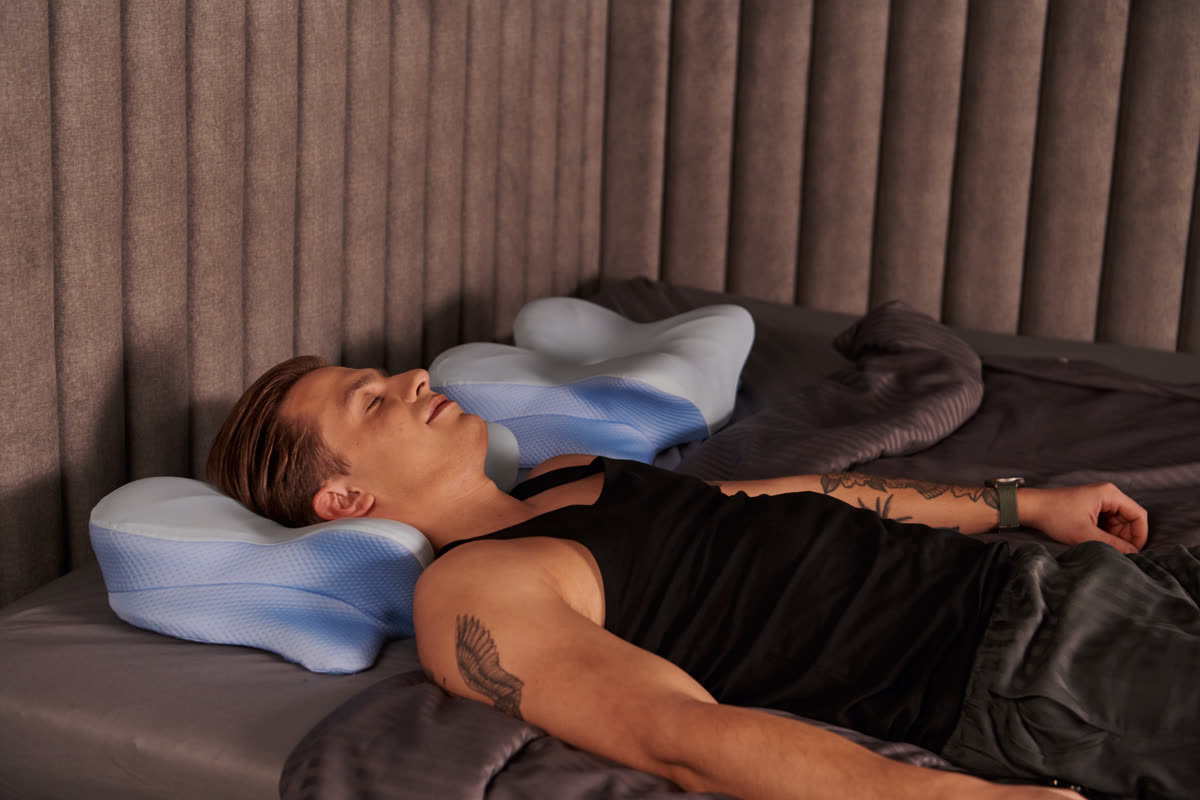
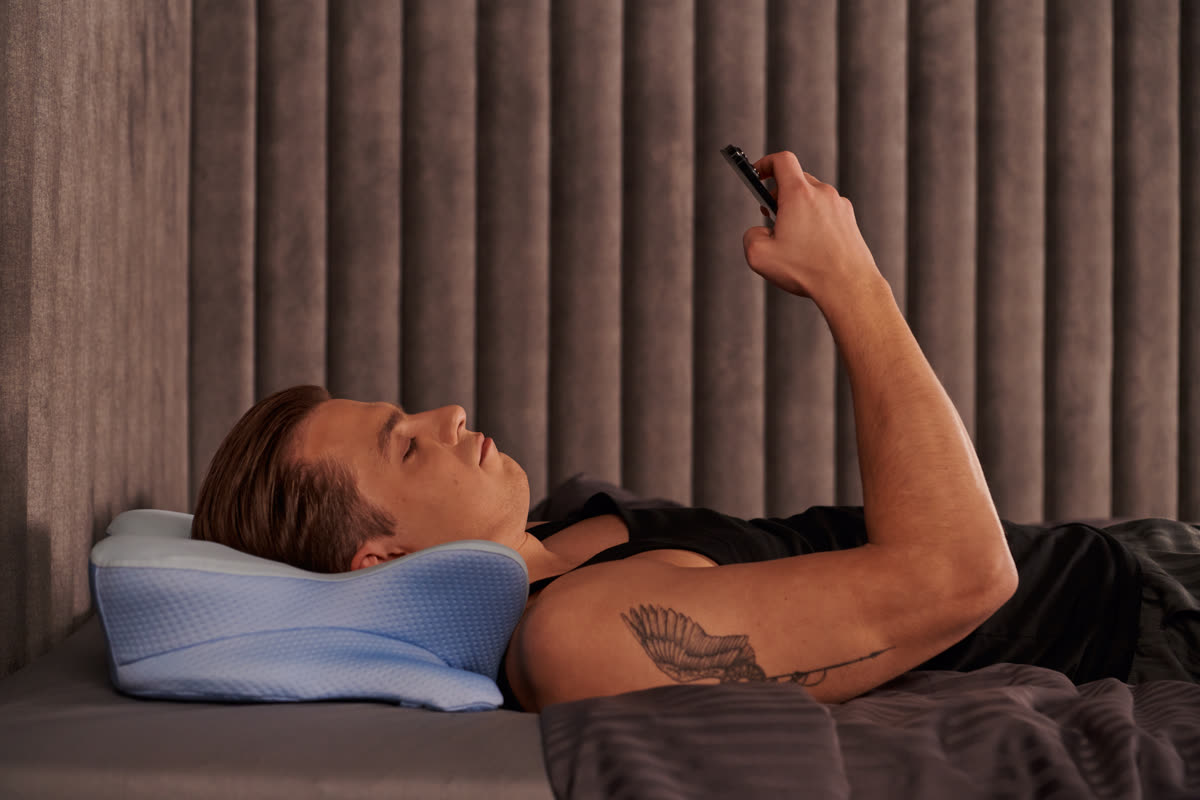
Man lying on his back with head and neck supported by the contoured pillow
Head and neck held level instead of dropping back — the position that keeps pressure off the cervical spine.
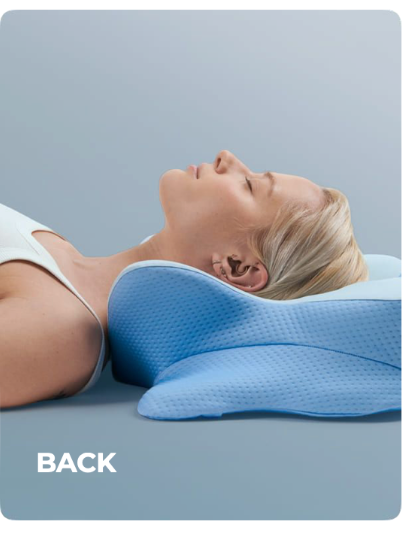
Side profile of a man on his back, chin level and airway unobstructed, resting on the contoured pillow
Chin level, not tucked to the chest — the jaw angle that keeps the airway open on your back.
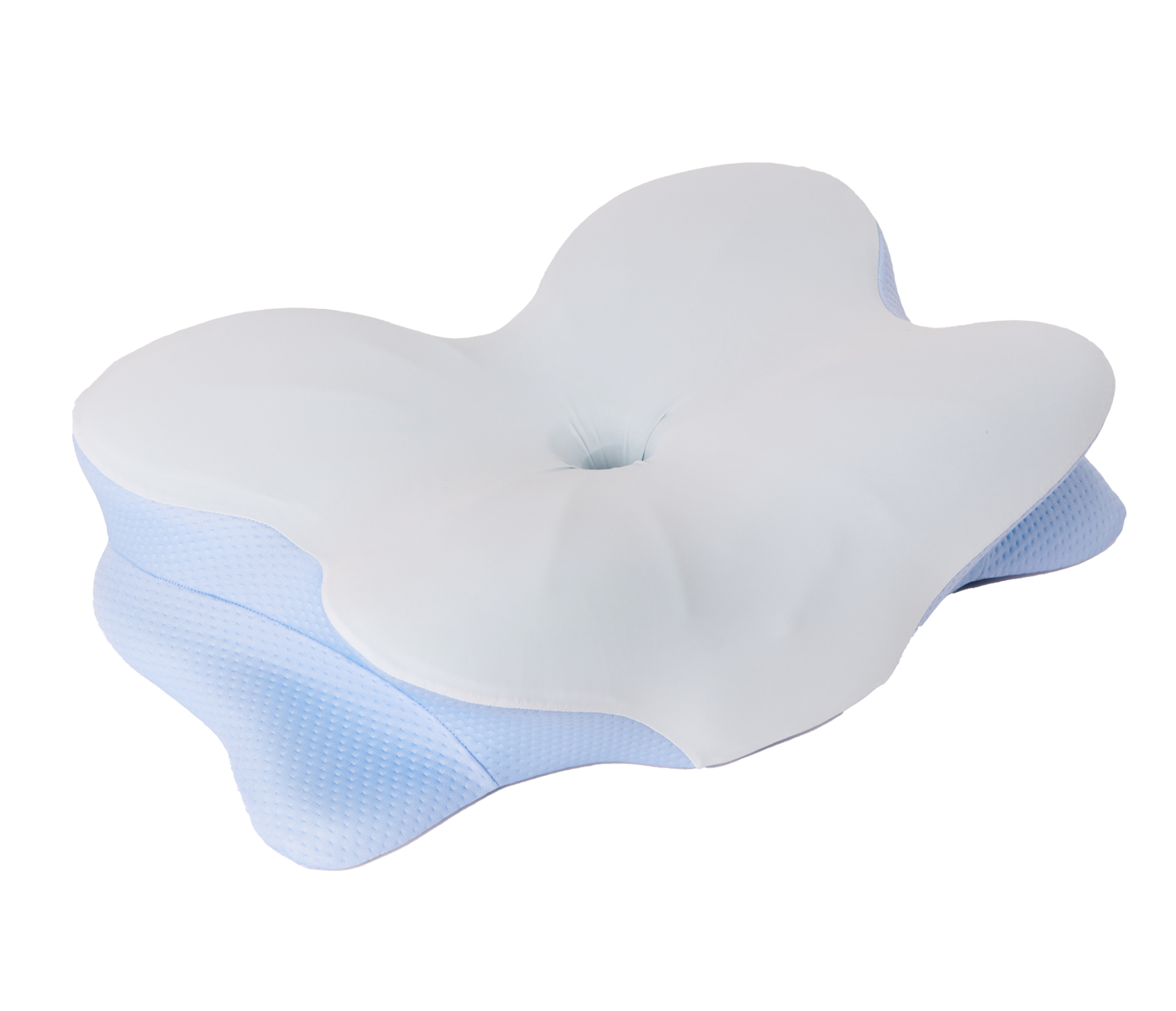
Angled cutout view of the butterfly-contour memory foam pillow
The butterfly contour from above — the shape that gives the hands and shoulder somewhere to rest.
If any of the three sound familiar
{{ ctaLabel }}
{{ discountLabel }} on the advertiser's page · 60-day guarantee

Why the pillow aisle keeps failing you

Most pillows are sold on softness, which is a comfort promise, not a support promise. Down and standard polyester fill compress within minutes of contact and stay compressed. Whatever loft you tested in the store is gone by 1am.

The second failure is shape. A rectangle assumes your head, neck, and shoulder all need the same height. They don't — and if you sleep on your side with an arm tucked up under the pillow, as most people do, a rectangle leaves you a gap exactly where support matters.

Standard pillow
  • Collapses under head weight within minutes
  • One flat height for head, neck and shoulder
  • Traps heat, so muscles stay tense
  • No space for a tucked arm
Contoured memory foam
  • Holds loft for the full night
  • Stepped height fills the neck's curve
  • Open-cell foam vents heat
  • Butterfly cut-outs give the hands a home

The version that sold two million — and then got redesigned

The pillow that kept coming up in my research was Derila. It had already moved more than two million units worldwide and sold out repeatedly across several countries. Then the makers did something unusual for a product that was already winning: they changed the shape.

The newer Derila Ergo keeps the ergonomic core — the stepped neck ridge, the memory foam that responds to body heat — and adds a butterfly-shaped contour along the sides. It looks like a design flourish. It isn't. It's a place to put your hands.

Close view of the stepped neck ridge and butterfly contour of the foam pillow
Butterfly contour
Side cut-outs let the arms and hands rest naturally instead of wedging under the pillow.
Stepped neck ridge
Two heights: the lower edge for back sleeping, the higher for side. The curve gets filled either way.
Heat-responsive foam
Softens to your shape in a few minutes, then holds it. No sinking flat by midnight.
Breathable build
Venting matters more than people think — an overheated muscle does not relax.
Shoulder arch
The cut-out under the shoulder is what stops the head from rotating out of line once you're asleep.
Jaw & airway angle
Keeping the chin from dropping to the chest is the whole mechanism behind positional snoring relief.

"You cannot stretch your way out of eight hours of bad alignment. You have to fix the eight hours."

Find your position, then read the row

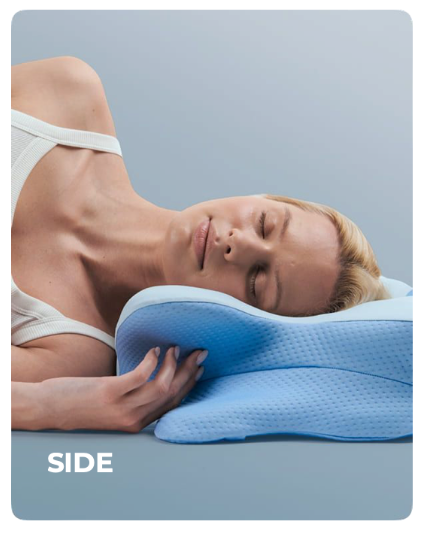
Side sleeping position on a contoured pillow
Side
Back sleeping position on a contoured pillow
Back
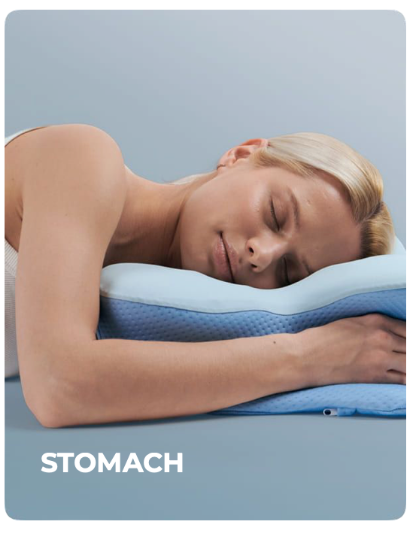
Stomach sleeping position on a contoured pillow
Stomach
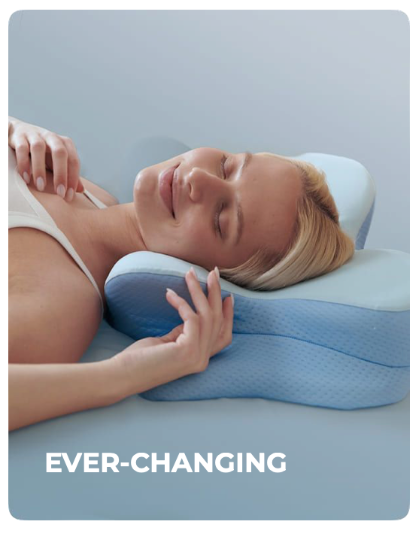
Sleeper changing positions through the night
Ever-changing
Side
The most common position and the one most punished by flat pillows. You need enough height to keep the nose in line with the sternum, plus room for the lower arm.
Back
Here too much height is the danger — the chin drops toward the chest and the airway narrows. A lower front edge with neck support behind it is what you want.
Switcher
If you move between the two all night, a single-height rectangle is wrong in at least one of them. A stepped profile is the practical compromise.

What the first month actually feels like

Nobody should promise you a cured neck overnight, and I won't. Changing sleep posture is a small mechanical correction that compounds. This was roughly my timeline.

NIGHTS 1–3
Unfamiliar. A contoured pillow feels firmer than what you're used to; that's the support you were missing being obvious about itself.
WEEK 1
The morning stiffness arrives later in the day, or milder. For me the finger numbness was the first thing to go.
WEEKS 2–4
Fewer wake-ups. My husband stopped mentioning the snoring. The stretches I'd been doing for years finally started holding.
2M+
Units sold worldwide across the Derila range
Sold out
Repeatedly, in multiple countries, on demand spikes
1 in 3
Adults report waking with neck or shoulder pain
85%
Report better sleep, per the advertiser's product page
Before you read the small print
{{ ctaLabel }}
{{ discountLabel }} on the advertiser's page · 60-day guarantee

Questions I had first

Is memory foam too hot to sleep on?
Old-generation foam was. Open-cell foam vents considerably better, and the Ergo's contour cut-outs add airflow at the sides.
Will it help with snoring?
If your snoring is positional — a chin-tucked, mouth-open pattern — better head alignment often helps. If it's structural or you've been diagnosed with apnea, a pillow is support, not treatment. See your doctor.
How long is the adjustment period?
Give it a full week before judging. Most people who quit a contoured pillow quit on night two.
Do I need a new mattress too?
Probably not first. The head is the heaviest unsupported part of the sleeping body and the cheapest variable to fix.
Readers who wrote in

Not everyone came for the neck

★★★★★

"I'm 67 and arthritis had made sleeping miserable. First night on the contoured pillow I slept until morning. The neck pain is gone."

Karen H. · Missouri
★★★★★

"Years of snoring and stiff mornings. The snoring has almost stopped and I wake up without the ache. I did not expect a pillow to do that."

Josh P. · Florida
★★★★★

"Spent thousands on sleep gear, including a machine I never got used to. My wife moved back from the guest room last week."

Michael K. · New York
Reader accounts supplied by the advertiser. Individual results vary — replace with your own verified reviews and star rating before launch.

What the alternatives cost

I priced out the route I nearly took, using typical US figures. This is the part that decided it for me.

One visit to a sleep specialist$200–300
CPAP machine$500–1,000
Replacement CPAP supplies, monthly$50–100
Chiropractor, per session$70

A contoured pillow is a fraction of any single line above — and it is the only one you use every night without thinking about it.

Where the price actually lands
Therapeutic pillows at medical supply stores$200+
1 pillow, list price$149.98
1 pillow, with the current discount$59.99
Family pack (4), per pillowfrom $37.49
Pricing is the advertiser's and changes with the promotion. Households tend to buy in multiples — one per bed, one for the guest room, one that travels — which is also why it keeps selling out.

Comments

Moderated
N
Nathaniel W. · 2 days ago
Skeptical, but they take returns, so I tried it. Noticed the difference around night four or five.
S
Sabrina H. · 4 days ago
Took a few nights to get used to the shape. Now I can't sleep without it — no stiff neck in weeks.
M
Maggie R. · 1 week ago
My physical therapist was the one who suggested trying a contoured pillow. Wish I'd done it years ago.
Comments supplied by the advertiser and shortened for length. Swap for your own moderated comments before launch.
{{ ctaKicker }}

{{ ctaHeadline }}

Stock has run out more than once on this product. If it's available today, the current offer — {{ discountLabel }} — is on the advertiser's page below.

✓  Fast global shipping ✓  60-day guarantee ✓  Third-party tested & certified
{{ ctaLabel }}
Availability and pricing are set by the advertiser and may change

Disclosure: This is an advertorial. We have a commercial relationship with the advertiser and may earn a commission on purchases made through links on this page, at no additional cost to you. This page is not affiliated with, endorsed by, or operated by the manufacturer or any brand mentioned, and is not the manufacturer's official website. Product names and trademarks belong to their respective owners.

This is an advertisement and not an actual news article, blog, or consumer protection update. Any photographs of people on this page are models. Pricing, discounts and availability are set by the advertiser and may change without notice.

Content is for general information only and does not constitute medical advice, diagnosis, or treatment. The product is not intended to diagnose, treat, cure, or prevent any disease, and is not a substitute for medication or treatment prescribed by a physician. Individual results vary. Consult a qualified healthcare provider about sleep disorders, breathing problems, or persistent pain.

© 2026 · Privacy · Terms · Contact

Derila Ergo — {{ discountLabel }} while stock lasts {{ ctaLabel }}